When Genres Collide: Inside the Underground Labs Cooking Up Music's Most Exciting New Sounds
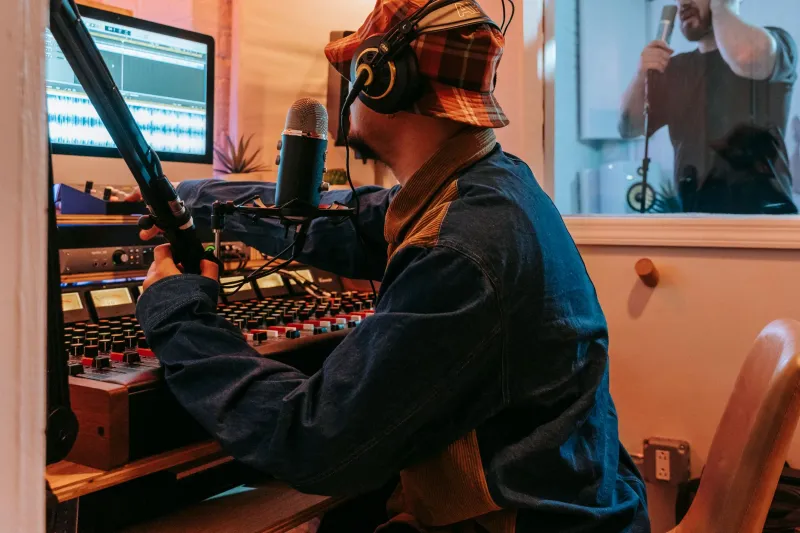
Forget everything you think you know about genre. The neatly labeled bins at the record store — back when record stores existed — were always a convenient fiction. Music doesn't actually live in boxes. It never did. But right now, in basements and bedrooms and converted garages from Atlanta to Portland, a generation of artists is making that point impossible to ignore.
Welcome to the era of the genre mashup. Not the awkward celebrity duet that pairs a country star with a rapper for a Grammy bump. The real thing. Organic, weird, technically demanding, and increasingly unavoidable.
Why "Genre" Was Always a Marketing Problem
Before we talk about what's being created, it helps to understand what's being dismantled.
Genre categories exist primarily to serve the music industry's distribution and marketing infrastructure. Radio stations needed formats. Record stores needed sections. Streaming platforms needed playlists. The categories were never really about the music — they were about making the music easier to sell.
Artists have always known this. Blues fed into rock. Jazz bled into soul. Hip-hop absorbed everything it touched. The difference now is that the gatekeepers who enforced genre boundaries — radio programmers, label A&R departments, music journalists with institutional power — have lost significant ground. And the artists who grew up consuming music through streaming, where an algorithm might serve you Hank Williams followed by Playboi Carti followed by Charli XCX, have genuinely internalized a more fluid understanding of what music can be.
The result is a creative moment that feels genuinely unprecedented, even if the underlying impulse is as old as music itself.
Trap-Folk: The Collision Nobody Saw Coming
If you want a case study in successful genre fusion, start with the unlikely marriage of trap production and folk songwriting.
On paper, it shouldn't work. Trap's 808-heavy, hi-hat-stuttering aesthetic feels like the sonic opposite of acoustic folk's intimacy and narrative simplicity. But a cluster of artists — many of them operating entirely independently — have found something genuinely compelling in the tension between those worlds.
The appeal makes sense when you think about it. Both genres, at their best, are fundamentally about storytelling. Both prioritize authenticity over polish. Both carry a tradition of artists speaking to and for communities that mainstream culture has historically overlooked. The production contrast isn't a bug; it's the whole point. The dissonance creates space for emotional complexity that neither genre achieves quite as effectively on its own.
Producers working in this space describe a particular technical challenge: the mixing and mastering demands are genuinely different for each genre, and finding a middle ground requires a willingness to break rules that most trained engineers have spent years internalizing.
"You're basically fighting the physics of each genre against each other," explains one Atlanta-based producer who has worked on several trap-folk projects. "Trap wants everything in the low end, punchy and wide. Folk wants clarity in the midrange, space around the vocals. Getting both to coexist without either one feeling compromised is a real engineering problem. But when you crack it, the sound is unlike anything else."
Hyperpop Meets R&B: Emotion Turned Up to Eleven
Another fusion that's gaining serious traction is the intersection of hyperpop's maximalist, digitally distorted aesthetic with R&B's emotional depth and vocal tradition.
Hyperpop — the genre that emerged from the SoundCloud underground and was popularized by artists like 100 gecs and Charli XCX — is defined by its deliberate excess. Pitched-up vocals, blown-out production, tempos that feel almost physically aggressive. It's music designed to overwhelm the senses.
R&B, by contrast, has historically prized restraint. The space between the notes. The vulnerability in the delivery. The slow build.
What happens when you combine them is something that hits harder emotionally than either genre manages alone. Artists like Doechii and PinkPantheress have been exploring this territory, and the results have been commercially and critically striking. The hyperpop production amplifies the emotional stakes of R&B songwriting rather than undermining them. The vulnerability becomes more intense, not less, when it's wrapped in something that sounds like a computer having a breakdown.
For independent artists working in this space, the appeal is partly practical: hyperpop production can be created affordably in a home studio environment, which lowers the barrier to entry for R&B artists who might not have the budget for traditional live instrumentation.
Country-Drill: The Most Controversial Collision
If trap-folk is the underground's favorite fusion experiment and hyperpop-R&B is the critical darling, then country-drill is the one making the establishment genuinely uncomfortable — which is probably the best indicator of its significance.
Drill music, with its menacing production and unflinching lyrical content, emerged from Chicago's South Side and was later transformed by UK artists into something distinctly its own. Country music carries the weight of American mythology, rural identity, and — let's be honest — a complicated racial history that the genre is still actively working through.
Putting those two things in a room together is a provocation. And some artists are doing exactly that, not for shock value, but because the thematic overlap is genuinely rich. Both genres deal in hardship, community, and the specific textures of life in places that major media tends to ignore. The sonic collision is jarring by design, and the conversation it opens up about American identity is more interesting than most music discourse happening anywhere right now.
What Streaming Platforms Are Finally Getting Right
For years, streaming platforms were actually a barrier to genre fusion artists finding their audience. Playlist culture rewarded genre purity. Algorithmic recommendation systems were trained on existing categories and struggled to know where to put something that didn't fit neatly.
That's starting to change. Spotify's editorial playlists have gotten more adventurous, and the platform's mood-based and activity-based playlists have created spaces where genre-defying tracks can land without needing a category label. Apple Music's editorial team has been increasingly willing to champion boundary-crossing artists. Tidal's editorial voice has always skewed toward the adventurous.
More importantly, the data is backing up what the artists already knew: audiences aren't nearly as genre-loyal as the industry assumed. Listeners who find one genre-fusion artist tend to explore the broader ecosystem aggressively. The community around experimental genre work is passionate and engaged in ways that pure-genre audiences sometimes aren't.
The Practical Takeaway for Emerging Artists
If you're an emerging artist sitting with a pile of influences that don't seem to belong together, the message from everyone working in this space is consistent: lean into it.
The technical challenges are real but solvable. Start by studying the production fundamentals of each genre you're working with separately before attempting to merge them. Understand why each genre sounds the way it does before you start breaking the rules. Find producers who are genuinely curious rather than genre-specialized.
And trust that there's an audience for work that sounds like nothing else. In a streaming environment where listeners have access to essentially all recorded music ever made, novelty isn't just an artistic virtue — it's a discovery mechanism. The song that sounds completely unlike anything else in a playlist is the one that makes someone stop scrolling.
Genre fusion isn't a gimmick. It's what music sounds like when artists stop asking for permission.