Beyond the Box: Why Today's Most Exciting Artists Refuse to Pick a Lane
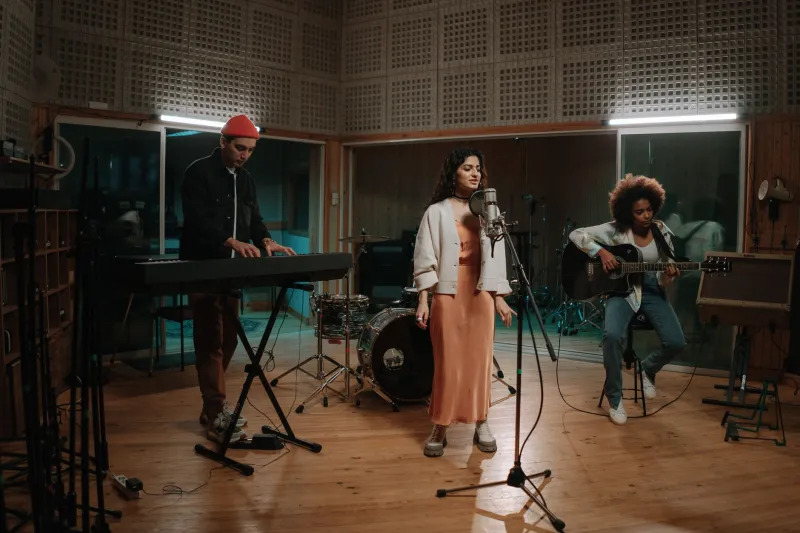
Somebody at a streaming platform once had to sit down and decide what genre to file a certain artist under. That person's job has gotten a lot harder lately, and honestly, good.
The genre system that shaped how music was marketed, sold, and discovered for the better part of a century was built around convenience — for labels, for radio programmers, for record store bins. It was never really built around artists. And a growing number of musicians have noticed.
The Sound of Not Fitting In
Spend a few hours on Bandcamp or deep-diving through SoundCloud and you'll start to hear it everywhere — music that genuinely refuses to sit still. A track might open with something that sounds like classic Appalachian folk, then drop into a 808-heavy verse that owes everything to Atlanta trap, then dissolve into a synth-washed chorus that could've come off a hyperpop release. And somehow it works.
This isn't random experimentation for shock value. The artists making this kind of music aren't throwing genres at the wall to see what sticks. They grew up listening to everything simultaneously — a Spotify playlist doesn't have a genre filter running in the background when a fifteen-year-old is building their taste. The blending feels natural to them because their entire listening life was blended.
The result is a generation of artists who experience genre boundaries as genuinely artificial. They're not breaking rules they believe in. They're just making the music that lives inside their heads.
What the Algorithms Actually Reward
Here's the complicated part, and it's worth being honest about it: genre-blending isn't purely a creative rebellion. Platform realities have shaped it too.
Streaming algorithms are built around listener behavior, and listener behavior has shifted dramatically. People aren't sitting down to listen to a genre — they're listening to moods, activities, vibes. A workout playlist doesn't care if the third track is technically pop-punk and the fourth is R&B. A late-night studying playlist will happily mix ambient electronic with acoustic singer-songwriter material.
Some artists have clearly clocked this and are making deliberate choices about where their sound lands. If you can credibly exist in three or four playlist categories, your discovery surface area multiplies. That's not cynical — it's just understanding the landscape you're working in. But it does raise a fair question about where genuine artistic vision ends and platform optimization begins.
The honest answer is probably that both things are true at the same time, and that's okay. Artists have always responded to the commercial realities of their era. The Beatles made decisions based on what radio would play. The genre-blending happening right now is just a more democratized version of the same adaptive instinct.
The Discovery Problem (and Opportunity)
For listeners, the collapse of clean genre lines creates a real discovery challenge. If you loved an artist's folk-influenced debut and their next project goes full electronic, the algorithmic systems that should be connecting you to similar music suddenly don't know what to do with you.
But here's the flip side: this same confusion creates unexpected discovery moments that a more rigid genre system would never allow. When an artist defies easy categorization, their music ends up in front of ears that would never have sought it out. A listener who thinks they don't like country music might fall hard for something that has country DNA buried inside a production style they already love. The genre wall that kept them away never got built.
For emerging artists specifically, this is genuinely useful information. Building a sound that touches multiple communities — authentically, not just as a marketing strategy — means you're not dependent on cracking a single, crowded genre. You're planting seeds in several places at once.
The Branding Tightrope
There's a real tension that genre-blending artists have to navigate, though, and it's worth naming. Genre isn't just about sound — it's about community. Country music has a community. Hip-hop has a community. Indie rock has a community. When you exist between genres, you risk not fully belonging to any of them.
Some artists have solved this by leaning into the identity of being unclassifiable. The genre itself becomes "artist's name music" — a category of one. That works when the artistry is strong enough and the personality is compelling enough to anchor the audience. But it requires consistent, distinctive storytelling about who you are and what you're doing, because you can't rely on a genre community to do that work for you.
This is where platforms like Operation Phoenix Records see the real opportunity. Artists who are genuinely blazing new sonic trails need spaces and voices that celebrate the work on its own terms, not through the filter of whether it fits a predefined box. The story of the music becomes as important as the music itself.
Creative Freedom Is the Point
Strip away the algorithm talk and the marketing strategy and the discovery mechanics, and what you're left with is something pretty simple: artists making music that reflects the full range of what they love, without apology.
That's not a trend. That's what music has always been trying to do when it's at its best. The genres were always just organizational tools — useful fictions that helped people find things they might like. They were never supposed to be ceilings.
The most exciting thing about where independent music is right now is that those ceilings are coming down fast. An artist who grew up loving Dolly Parton and Death Grips and Burial in equal measure shouldn't have to pick one and pretend the others don't exist. Their music is better — and more honest — when all of it shows up.
That's the kind of rising we're here for.