No Label, No Problem: How Independent Artists Are Building Empires From Their Spare Bedrooms
The Old Gatekeepers Are Losing Their Keys
For decades, the path to a music career ran straight through a handful of glass towers in New York, Los Angeles, and Nashville. You needed a deal. You needed a budget. You needed someone in a suit to believe in you before anyone else got the chance to. That world hasn't completely disappeared, but it's been cracked wide open — and independent artists are flooding through the gap.
Today, a musician with a laptop, a decent condenser mic, and a reliable internet connection can release a song to every major streaming platform on the planet by Friday morning. That's not a hypothetical. That's Tuesday for thousands of artists across the US who've decided to bet on themselves instead of waiting for permission.
At Operation Phoenix Records, we've always believed that the most powerful thing an artist can do is rise on their own terms. So we went looking for the people actually doing it — and what they told us was equal parts inspiring and practical.
The Bedroom Is the New Studio
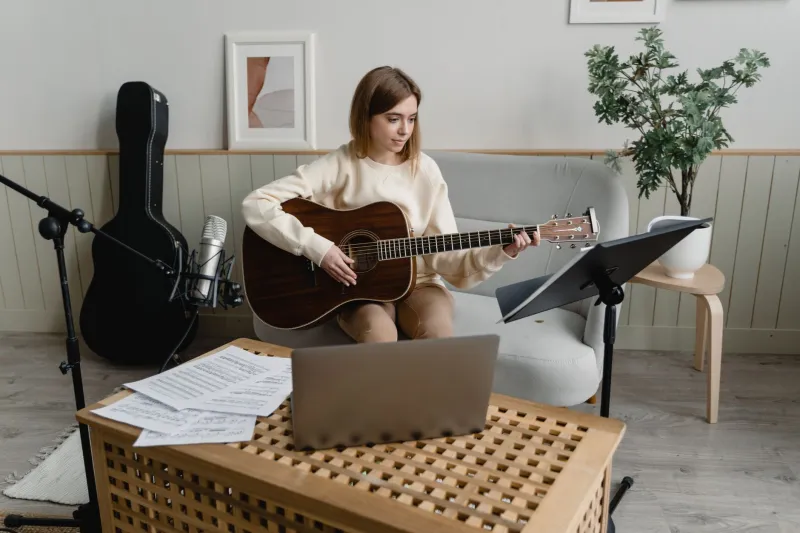
Producer and singer-songwriter Maya Calloway, based out of Columbus, Ohio, built her entire debut project in a closet lined with moving blankets. "I spent maybe $400 total on gear before I released my first EP," she says. "A Blue Yeti mic, some foam panels from Amazon, and a free trial of GarageBand that I eventually upgraded to Logic Pro." That EP now sits at over 2.3 million streams on Spotify.
Maya's story isn't unique — it's becoming the norm. Digital audio workstations like Logic Pro, Ableton Live, and FL Studio have democratized music production in a way that would've seemed impossible twenty years ago. YouTube tutorials, Reddit communities, and Discord servers dedicated to home recording have essentially created a free music production university available to anyone with Wi-Fi.
For artists who want to go even further without breaking the bank, platforms like Splice offer royalty-free samples and loops for a monthly subscription fee. "I use Splice constantly," says Chicago-based hip-hop artist Darius Fenn, whose single Overtime racked up over 5 million streams last year without a single label dollar behind it. "It gives me access to sounds I could never afford to create from scratch."
Distribution Without the Middleman
Once the music is made, getting it onto streaming platforms used to require a label relationship. Now? You've got options — a lot of them. Services like DistroKid, TuneCore, CD Baby, and UnitedMasters let independent artists upload their music directly to Spotify, Apple Music, Amazon Music, Tidal, and dozens of other platforms for a flat annual fee or a small percentage of royalties.
"DistroKid changed everything for me," says Priya Nakamura, an indie-pop artist from Portland whose self-released album Glass Rooms earned her a feature in a major Spotify editorial playlist last spring. "I uploaded my album on a Sunday night and it was live everywhere by Wednesday. No waiting, no approval process, no one telling me my artwork wasn't right."
Beyond just getting music up, these distribution platforms also handle metadata, ISRC codes, and increasingly offer analytics dashboards that rival what major labels provide their artists. Knowing which cities are streaming your music, which playlists are driving plays, and what time of day your audience is listening — that's real data that informs real decisions.
Marketing Like a Media Company
Here's where a lot of talented independent artists stumble: the music is great, but nobody hears it. Building an audience without a label's marketing machine behind you requires thinking like a content creator as much as a musician.
Social media, particularly TikTok, Instagram Reels, and YouTube Shorts, has become the discovery engine for a huge portion of music listeners under 35. A fifteen-second clip of a song used in the right TikTok video can send streams through the roof overnight. Darius Fenn credits a single viral TikTok moment — not a PR campaign — with launching Overtime into the stratosphere.
"I posted a video of myself writing the hook in my car at like 2 a.m.," he laughs. "That video got 800,000 views in two days. People wanted the song before it was even finished."
Beyond organic social content, savvy independent artists are also investing in playlist pitching services, building email lists through platforms like Mailchimp or Substack, and using Spotify for Artists' own editorial pitch tool to submit unreleased tracks for playlist consideration. It's a grind, but it's a learnable one.
The Mental Game Nobody Talks About
For all the practical tools and platforms available, every independent artist we spoke to mentioned the same invisible challenge: the psychological weight of doing it alone.
There's no A&R rep hyping you up before a release. No publicist fielding your anxious 3 a.m. texts. No advance check to cushion the blow of a slow streaming week. The emotional labor of self-management is real, and it's something the industry rarely acknowledges.
"There were months where I questioned everything," admits Priya. "You put out a song and it doesn't immediately blow up, and you start wondering if you're fooling yourself. The key for me was separating the creative work from the metrics. I had to love making the music independent of how it performed."
Maya echoes that sentiment. "You have to build a support system — other independent artists, online communities, even just a friend who gets it. The isolation is the hardest part. The tools are actually the easy part once you learn them."
Mental resilience, it turns out, might be the most important piece of gear in any independent artist's setup.
Building Something That Lasts
The independent path isn't for everyone, and that's okay. Some artists genuinely thrive with the infrastructure and investment that a major label provides. But for those who crave creative control, ownership of their masters, and the freedom to build on their own timeline, the landscape has never been more favorable.
The artists rising through the independent route today aren't just making music — they're building brands, communities, and businesses. They own their catalogs. They set their release schedules. They make the creative calls.
That's the phoenix story, right there. Rising not because someone handed you wings, but because you built them yourself, one track at a time.