Five Hundred Dollars and a Dream: How Home Studios Rewrote the Rules of Music Production
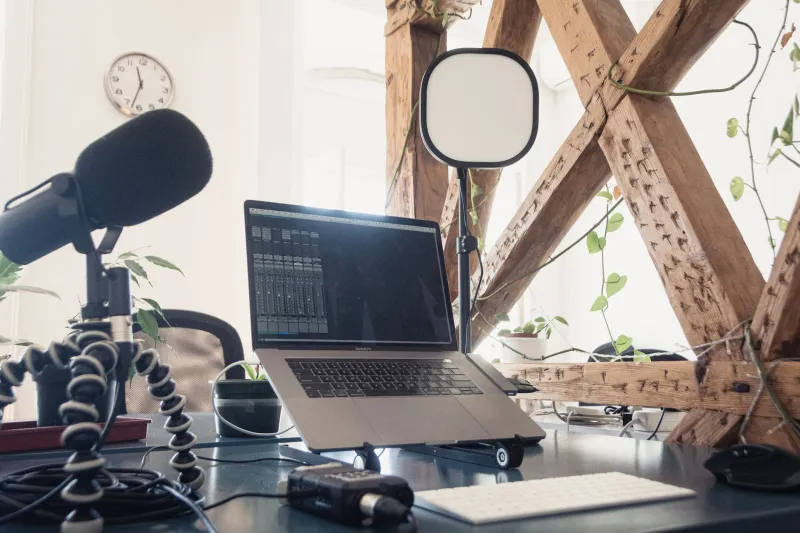
Not that long ago, making a professional-sounding record meant booking time at a real studio, shaking hands with an engineer who'd worked with someone famous, and praying your budget held out past the second session. That world still exists, sure — but it's no longer the only world. Today, a laptop, a decent USB microphone, a pair of budget studio headphones, and a free afternoon on YouTube is genuinely enough to get started. And for a growing wave of independent artists, that's exactly where it all began.
The shift didn't happen overnight, but when it hit, it hit hard.
The Gear That Changed Everything
Walk into any music gear retailer — or just scroll through Sweetwater or Guitar Center's website — and you'll find audio interfaces for under $100, condenser mics that punch well above their price tag, and DAWs (digital audio workstations) like GarageBand that come completely free on every Mac. Ableton Live Lite ships bundled with half the MIDI controllers on the market. FL Studio offers a one-time purchase that never expires. Reaper, one of the most powerful recording environments available, costs $60 for a personal license.
For around $300 to $500 total, you can assemble a functional home recording setup that would have cost tens of thousands of dollars in the 1990s. That's not hyperbole — that's just math applied to falling hardware prices and open-source software culture.
Producer Marcus Teel, who's been crafting beats out of his Baltimore apartment for the last four years, put it simply: "I started with an interface I bought used on Facebook Marketplace for $45 and a Blue Snowball mic. My first track got 80,000 streams. I reinvested every dollar and upgraded piece by piece. Nobody handed me a studio."
That kind of story isn't rare anymore. It's practically the template.
YouTube as the World's Best Audio Engineering School
Here's the thing nobody talks about enough: it's not just the gear that democratized music production. It's the knowledge. And that knowledge is now free, searchable, and available at 2 a.m. when inspiration strikes.
Channels like In The Mix, Produce Like A Pro, and Streaky have millions of combined subscribers, each offering tutorials that cover everything from basic compression settings to mastering chains that can compete with commercial releases. Reddit communities like r/WeAreTheMusicMakers have become informal mentorship hubs where a bedroom producer in rural Tennessee can get feedback from someone who's mixed for major-label artists.
The learning curve is still real — nobody's pretending that watching a few YouTube videos makes you a Grammy-winning engineer. But the access to that curve has never been more level. You can now learn through trial, error, and community in ways that were genuinely impossible before broadband internet became a household utility.
Ashley Reeves, an indie singer-songwriter based out of Nashville who self-produces her entire catalog, credits YouTube almost entirely for her technical education. "I never went to school for audio. I just watched obsessively and practiced. The first six months of stuff I made was terrible. But by month nine, people were asking me who mixed my tracks."
What Listeners Are Actually Hearing Now
Here's where it gets interesting from a cultural standpoint: listener expectations around production quality have shifted in ways that actually favor the bedroom producer aesthetic.
The lo-fi hip-hop genre is the obvious example — a whole sonic movement built around warm imperfection, tape hiss, and vinyl crackle that listeners actively seek out. But it goes beyond that. Artists like Clairo, Rex Orange County, and early Billie Eilish built massive followings on recordings made in bedrooms with modest gear. That intimacy became part of the brand. The slight rawness wasn't a flaw; it was a feature.
This doesn't mean professional studio polish is dead — far from it. But it does mean the gap between "sounds homemade" and "sounds like a hit" has narrowed dramatically. Listeners, especially younger ones, are often more drawn to authenticity of feeling than perfection of execution.
For independent artists, that's a genuine competitive advantage.
Genre Evolution Happening in Real Time
One of the most underappreciated side effects of the bedroom studio boom is how it's accelerating genre mutation. When production tools are widely distributed and artists are self-directing their creative vision without label interference, sounds blend and evolve faster than traditional industry pipelines can track.
Hyperpop, bedroom pop, lo-fi soul, emo rap — these genres didn't emerge from boardroom decisions about market positioning. They emerged from producers experimenting alone at midnight, sharing rough cuts in Discord servers, and iterating based on community response. The feedback loop is tighter, the experimentation is wilder, and the results are genuinely exciting.
For Operation Phoenix Records, this is exactly the kind of creative energy we're here to document and celebrate. The artists rising in this landscape aren't waiting for permission.
The Sustainability Question
Of course, the bedroom studio revolution isn't without its complications. Lower barriers to entry mean more music — a lot more music. Spotify receives somewhere in the neighborhood of 100,000 new tracks every single day. Standing out in that environment is its own enormous challenge, and production quality is just one piece of the puzzle.
There's also the reality that self-producing requires wearing a lot of hats. You're the artist, the engineer, the mixer, the marketing department, and the accountant. That's sustainable for some people and genuinely exhausting for others.
But here's what's undeniable: the option now exists. The path is real. For artists willing to put in the hours — both making music and learning the craft of making music — a fully independent, self-produced career is no longer a pipe dream. It's a documented, repeatable outcome.
That $500 investment isn't just buying gear. It's buying freedom.
Start Where You Are
If you're an emerging artist reading this and you've been waiting until you can afford "real" studio time, consider this your sign to stop waiting. The tools are here. The tutorials are free. The community is massive and largely welcoming.
Your first recordings will probably be rough. That's fine — so were everyone else's. The artists who are winning in this space didn't start with perfect setups. They started with something, learned relentlessly, and kept going.
The bedroom studio revolution is still happening. You can still get in on it.