Ghost Vocals: How Artists Are Pulling Lost Performances Back From the Dead With AI
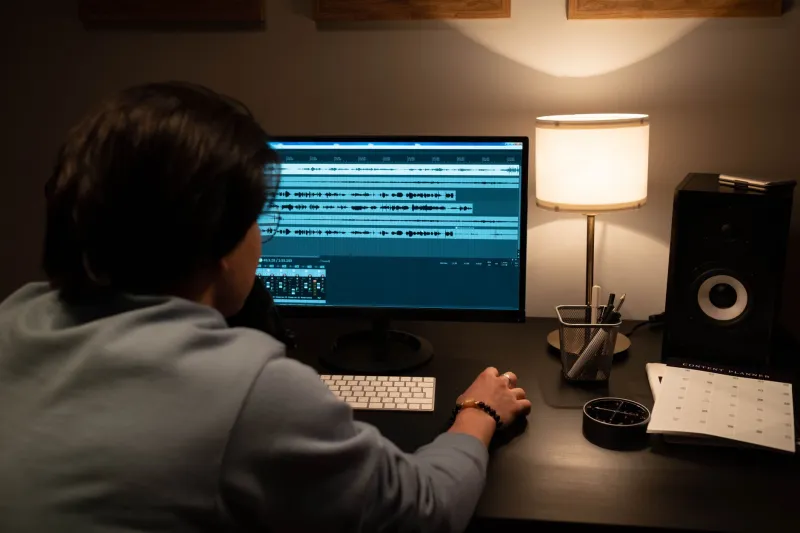
Every artist has a graveyard. Maybe it lives on an old laptop buried in a closet, or on a stack of hard drives labeled in Sharpie with years that feel like another lifetime. Unfinished vocal takes. Demo fragments recorded at 2 a.m. in a bathroom. A session that fell apart when the studio time ran out or the co-writer moved away. For most of music history, those recordings stayed dead.
That's changing fast.
A new wave of AI-powered voice synthesis and audio restoration tools is giving musicians the ability to dig up those buried performances and actually finish them. We're not talking about cheap tricks or gimmicks — artists are completing full projects using vocal fragments they recorded years ago, stitching together performances that were never meant to be heard alongside production that didn't exist when the original takes were laid down. The results are turning heads, and the conversation around what it means is only getting louder.
The Drawer Full of Almost-Songs
If you've been making music for any length of time, you know the feeling. You nail a verse in a session but can't crack the chorus. You record a hook that gives you chills but the rest of the song never materializes. Life intervenes. The moment passes. The file sits.
For independent artists especially, those incomplete recordings pile up fast. Studio time is expensive. Collaborators move on. Inspiration is inconsistent. What's left behind is often a collection of fragments that feel too good to throw away but too incomplete to use.
AI tools like those built around voice restoration, pitch correction at a granular level, and synthesis from existing vocal data are flipping that script. Artists are now feeding in those old fragments — sometimes just a few bars, sometimes a full verse with no chorus — and working with the technology to extend, complete, or reconstruct what they never finished.
The process isn't fully automated. It's more like having a very sophisticated collaborator who has studied your voice deeply and can help you fill in the blanks. You still have to make creative decisions. You still have to direct the work. But the raw material that would have stayed buried is suddenly usable again.
What the Technology Actually Does
It helps to understand what's actually happening under the hood, because the term "AI vocal restoration" covers a pretty wide range of capabilities.
At the simpler end, tools like iZotope's RX suite have been around for years and do things like remove background noise, fix clipping, and clean up room ambience on old recordings. That alone has saved countless demos that would otherwise be unusable.
More recently, tools powered by machine learning can go much further. They can analyze a singer's existing vocal catalog — tone, vibrato, breath patterns, phrasing tendencies — and use that data to generate new vocal performances that sound genuinely like that artist. Some platforms let you input a melody or lyrics and render a performance that matches the voice profile built from your own recordings.
For artists sitting on years of archived material, this means a vocal take from a 2017 demo session can potentially be completed, extended, or adapted to fit a production that didn't exist until 2024. The gap between what was captured and what was imagined can finally close.
The Ethical Weight of the Thing
None of this comes without complicated questions, and anyone serious about using these tools should sit with those questions before diving in.
The most straightforward use case — an artist using AI tools trained on their own voice to complete their own unfinished work — raises relatively few ethical flags. It's your voice, your material, your creative vision. You're essentially extending your own artistic reach.
But the territory gets murkier fast. What happens when a producer wants to use vocal fragments from a deceased collaborator to complete a posthumous project? What about using AI tools trained on a featured artist's voice without their explicit consent for new material? The music industry has already seen early legal skirmishes around AI-generated vocals that mimic real artists without permission, and those battles are far from settled.
For independent artists navigating this space, the practical advice is straightforward: document everything, get explicit written consent from any collaborator whose voice you're working with, and be transparent with your audience about the role AI played in the final product. Listeners are more sophisticated than the industry sometimes gives them credit for, and a lot of fans actually find the story of how a song got made just as compelling as the song itself.
Artists Already Living in the Future
The artists who are furthest ahead on this aren't treating AI as a replacement for human performance — they're treating it as a tool for recovering what was already human. There's a meaningful difference.
Some producers working in the indie and lo-fi spaces have started building entire albums around archived vocal sessions, using AI restoration to clean up recordings that were made in bedrooms and basements with consumer-grade gear. What would have been too rough to release five years ago is now release-ready, with the warmth and imperfection of the original performance intact.
Other artists are using the technology more aggressively — completing songs that were abandoned mid-session, filling in missing lines, even generating alternate versions of tracks where the original vocal didn't quite land. The flexibility is genuinely new territory.
The throughline across all of it is intention. The artists making the most interesting work with these tools are the ones who have a clear creative vision and are using AI to serve that vision, not to replace the hard work of developing one.
What This Means for Your Archive
If you're an independent artist with years of recordings collecting dust, this is probably the moment to start treating that archive as a resource instead of a reminder of things you didn't finish.
Start by taking inventory. What's actually there? A lot of artists are surprised when they go back through old sessions — there's more usable material than they remembered, and hearing it with fresh ears after some time away can reveal value that wasn't obvious in the moment.
From there, research the tools that fit your specific situation. If your old recordings have audio quality issues, restoration tools should be your first stop. If you're looking to extend or complete existing vocal takes, look into platforms that can work with your existing vocal data to fill gaps.
And don't underestimate the value of the story. An album or EP built from resurrected recordings has a narrative built right into it — the idea that these songs refused to stay buried, that they found their way to the surface eventually. That's a compelling thing to share with an audience, and it's the kind of story that connects.
The graveyard doesn't have to stay a graveyard. The technology to bring those performances back exists right now, and it's only getting more powerful. The artists who figure out how to use it thoughtfully — with care for the ethics and respect for the original creative intent — are going to have a serious advantage. Not because AI makes the music for them, but because it gives them access to parts of themselves they thought were gone for good.