Shelf Life: Why Your Scrapped Songs Might Be Your Smartest Career Move Yet
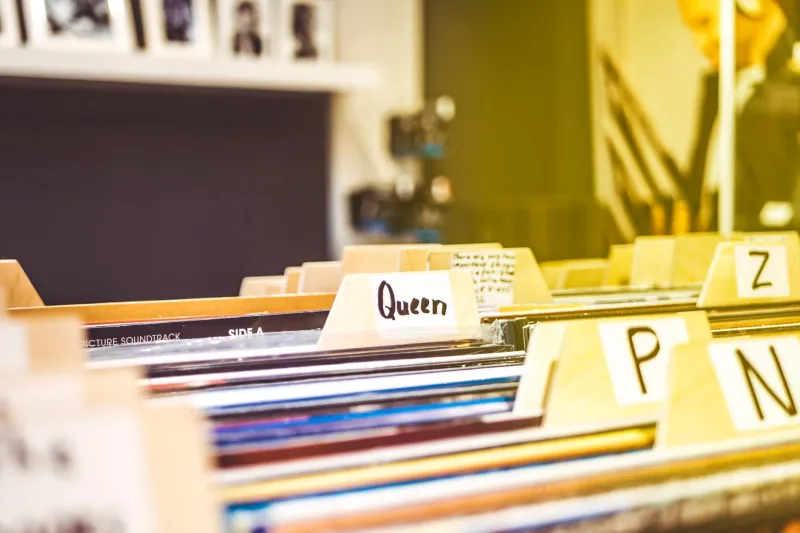
There's a hard drive somewhere — maybe it's under your bed, maybe it's in a cloud folder you haven't opened in three years — loaded with music you were convinced the world would never hear. A half-finished album from a darker chapter. A collab that fell apart before it ever got mixed. A single you pulled at the last second because the timing felt wrong, or you felt wrong, or everything just felt wrong.
Here's the thing nobody tells you when you're stuffing those files into a digital drawer: you might be sitting on gold.
Across the music landscape right now, a quiet but genuinely fascinating trend is unfolding. Artists — from major label veterans to bedroom indie acts with a few thousand followers — are cracking open their archives and treating old, shelved material not as evidence of failure, but as currency. Strategic, carefully deployed, emotionally resonant currency.
The Myth of the Wasted Project
For a long time, the music industry operated on a pretty brutal assumption: if something didn't come out, it didn't count. Unreleased meant unfinished. Abandoned meant failed. The whole machine was built around forward momentum — drop the record, run the cycle, move on.
But that framework made a lot more sense when the industry controlled the timeline. Now? Artists control the narrative in ways that weren't possible even a decade ago. And that changes everything about how we should think about shelved work.
Kelela is a perfect example. Her trajectory has never been linear — there were years of relative quiet, scrapped directions, and material that fans knew existed but couldn't access. When she finally resurfaced with Raven in 2023, that long gap wasn't perceived as a stumble. It read as intention. The years of silence and rumored shelved work had built a kind of anticipation that no promotional budget could manufacture. The absence was the story.
Frank Ocean practically wrote the modern playbook on this. The mythology around unreleased tracks, the years between channel ORANGE and Blonde, the Tumblr posts and cryptic updates — all of it transformed what could have been seen as a stalled career into one of the most talked-about slow burns in contemporary music. His shelved or delayed material became cultural events before a single note dropped publicly.
Why Abandoned Work Hits Different Now
Part of what's changed is the emotional temperature of music consumption in the streaming era. Listeners aren't just looking for new sounds — they're looking for connection, context, and story. A song that was shelved for five years and finally sees the light carries weight that a freshly minted track often can't manufacture.
There's an authenticity to imperfection that resonates right now. When an artist says, "I made this during one of the hardest periods of my life and I wasn't ready to share it" — that's not a PR line. That's an invitation into something real. And audiences can feel the difference.
For emerging artists especially, this reframing is huge. The pressure to constantly produce new content is relentless and, frankly, creatively exhausting. But what if the content you already made — the stuff you wrote off — could do some of that heavy lifting?
How to Actually Work With Your Archive
Okay, so let's get practical, because this isn't just a philosophical exercise. If you're an independent artist sitting on a backlog of unreleased material, here's how to start thinking about it strategically.
Audit what you actually have. Seriously, go through it. Not with the hypercritical ear you had when you made it, but with fresh ears and some distance. You might be surprised. A lot of artists report that songs they abandoned feel completely different two or three years later — sometimes better, sometimes just different enough to spark new ideas.
Think about sequencing and context. One of the most powerful things you can do with old material is pair it with new context. A voice memo, a short video about where you were when you made it, a social post that tells the story behind why it never came out — these layers transform a song from an artifact into an experience.
Don't dump the whole archive at once. This is where strategy matters. The artists who do this well are deliberate. They're not releasing everything they've ever made in a Google Drive link. They're choosing specific pieces that connect to where they are now, using the past to illuminate the present.
Consider the collab angle. Some of the most interesting archival releases involve resurfacing old collaborations — tracks made with artists who have since grown their own audiences, or partnerships that were ahead of their time. Reaching back out to a collaborator and saying "hey, I think the world is finally ready for this" can open doors on both sides.
The Emotional Permission Slip
Beyond the strategy, there's something else worth naming here: releasing old work requires a kind of emotional courage that doesn't always get acknowledged.
When you shelve something, you usually do it because it felt too raw, too personal, too risky, or just not good enough. Coming back to it means confronting whatever made you put it away in the first place. That's not nothing. And for a lot of artists, the act of releasing old material is itself part of the healing or the reinvention — a way of saying, I was there, I made this, and I'm not ashamed of it anymore.
That kind of vulnerability is magnetic. Listeners feel it. And in an era where audiences are increasingly skeptical of overly polished, algorithm-optimized content, the raw edges of archival work can be exactly what cuts through.
Nothing Is Ever Really Wasted
At Operation Phoenix Records, we've always believed that creative reinvention isn't about erasing the past — it's about building with it. The phoenix doesn't ignore the ash. It rises from it.
Your shelved tracks, your abandoned albums, your scrapped collabs — none of that is dead. It's dormant. And the difference between an artist who treats their archive like a graveyard and one who treats it like a resource is often the difference between stagnation and a genuinely compelling second act.
The music industry has always been obsessed with what's next. But right now, some of the most interesting moves are being made by artists brave enough to look back — and smart enough to know that what they find there might be exactly what their career needs.
So go open that hard drive. You might be surprised what's waiting for you.