Buried Treasure: Why Your Abandoned Projects Might Be the Best Thing You Ever Made
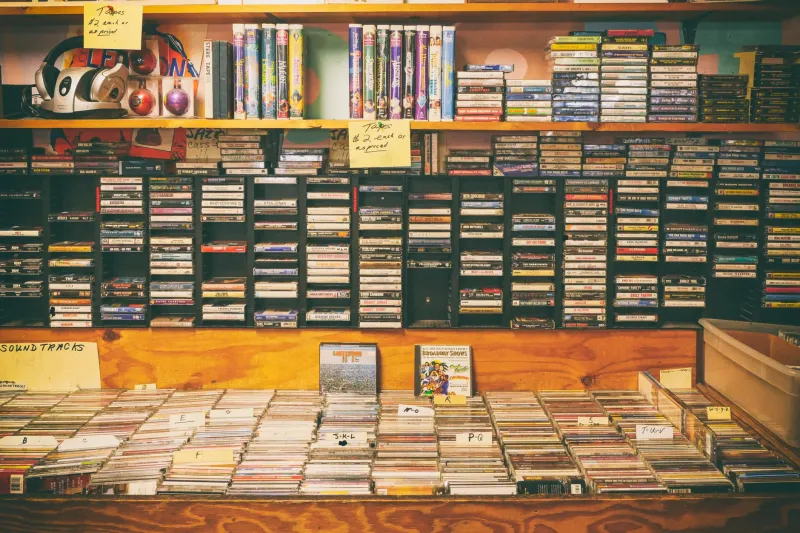
Somewhere on your hard drive — or maybe on a dusty external you haven't plugged in since 2019 — there's a folder. You probably named it something like "old stuff" or "not finished" or, if you were feeling dramatic that day, "trash." Inside it lives a collection of half-baked ideas, abandoned sessions, and songs you convinced yourself were too broken to fix.
Here's the uncomfortable truth: you might be sitting on your best work.
Across the independent music world, a quiet but powerful shift is happening. Artists are going back into their archives — not out of nostalgia, but out of strategy. They're treating their past creative failures as raw inventory rather than evidence of shortcomings. And the results are turning heads.
The Psychology of the Abandoned Demo
There's a reason we walk away from certain projects. Sometimes the arrangement felt wrong. Sometimes the emotional moment that inspired the song had passed and the recording started to feel hollow. Sometimes you just ran out of steam, money, or studio time. Whatever the reason, the act of abandoning something tends to stick a label on it: not good enough.
But that label is a lie — or at least, it's incomplete.
What you were really saying when you shelved that track wasn't "this is worthless." You were saying "this doesn't fit right now." And "right now" has a way of becoming "then" faster than any of us expect.
Creative distance is one of the most underrated tools in an artist's kit. When you step away from a piece of work for months or years, you stop hearing it through the fog of the moment you made it. You start hearing it the way a listener would — fresh, without all the baggage of the sessions that produced it. That shift in perspective can completely change how you evaluate what you've got.
What "Failed" Actually Means
Let's reframe the word. In the context of a recording that never got released, "failed" usually just means "unresolved." The song didn't fail — the circumstances around completing it did. Maybe the production style you were chasing at the time aged badly, but the core melody is still strong. Maybe the lyrics were rough but the vocal performance was electric. Maybe the whole thing is a mess structurally, but there's a four-bar hook buried in the bridge that could anchor an entirely new song.
This is where the work of creative archaeology comes in. It's not about releasing everything you've ever recorded. It's about going back through your catalog with the same critical eye you'd apply to new material — asking not "why didn't this work then?" but "what's actually here, and what could it become?"
Artists like Bon Iver, Frank Ocean, and Sufjan Stevens have all spoken publicly about the long, winding paths their most celebrated records took before seeing release. Entire albums got scrapped, rebuilt, or repurposed. What looked like creative dead ends turned into defining moments in their careers.
Practical Ways to Mine Your Own Archive
If you're ready to go digging, here's how to approach it without losing your mind in the process.
Do a full inventory first. Before you start listening to anything, just catalog what you have. File names, approximate dates, the project or session they came from. You'd be surprised how much clarity comes from simply knowing the scope of what you're working with.
Listen like a stranger. This one's harder than it sounds. Put on headphones, close your eyes, and try to hear the recording as if someone else made it. What would you think of it if a friend sent it to you? Where does your attention go? What pulls you in, even briefly?
Tag what's salvageable, not what's finished. You're not looking for complete songs ready to drop. You're looking for elements — a chord progression, a vocal run, a lyrical concept, a rhythm track — that have enough life in them to build something new around.
Consider the raw release. This one's become increasingly viable in the streaming era. There's a growing audience of devoted fans who genuinely want to hear the unpolished, unvarnished version of their favorite artists at work. A lo-fi demo released with honest context — "I made this in 2017 and never knew what to do with it" — can connect more deeply than a fully produced single. It's authentic in a way that's hard to manufacture.
Bring in a collaborator. Sometimes the reason a project stalled is that you hit the limit of what you could see in it alone. A fresh set of ears from a trusted collaborator can unlock arrangements, lyrical directions, or production ideas that were invisible to you when you were in the thick of it.
The Archive as a Living Document
The bigger conceptual shift here is moving away from the idea that your catalog has a clean dividing line between "released" and "dead." That binary thinking keeps a lot of valuable creative work locked in digital purgatory forever.
Think of your archive instead as a living document — something that grows in meaning and utility over time, not something that depreciates the moment it goes unreleased. The song you recorded at 23 that felt too raw might be exactly the right thing to put out at 31, when your audience has grown alongside you and can hold the weight of it.
Some artists have built entire secondary creative identities around their archives. They release "vault" collections, B-side compilations, or stripped-down acoustic versions of shelved material. These releases serve a dual purpose: they give dedicated fans something new to connect with, and they give the artist a chance to close creative loops that have been left open for years.
There's something genuinely freeing about that. It reframes the idea of creative failure entirely. Nothing you make has to be wasted. It just has to wait.
Your Next Album Might Already Be Done
That's the wildest version of this idea, and it's not as far-fetched as it sounds. Some artists have gone back through years of unfinished sessions and discovered that, with a little curation and some light production work, they had the bones of a full-length record sitting right there. Not a throwaway project — something real, something cohesive, something that tells a story about a specific period of their creative life that no new recording could replicate.
The point isn't to lower your standards. It's to recognize that your standards from five years ago weren't the whole story. You were working with different tools, different context, different ears. Some of what you made then didn't meet the bar you'd set for yourself in that moment — but it might clear the bar you're setting now.
Go open that folder. Plug in that hard drive. You might be surprised what's been waiting for you.