Your Songs, Your Rules: Why Artists Are Tearing Up the Remix Rulebook
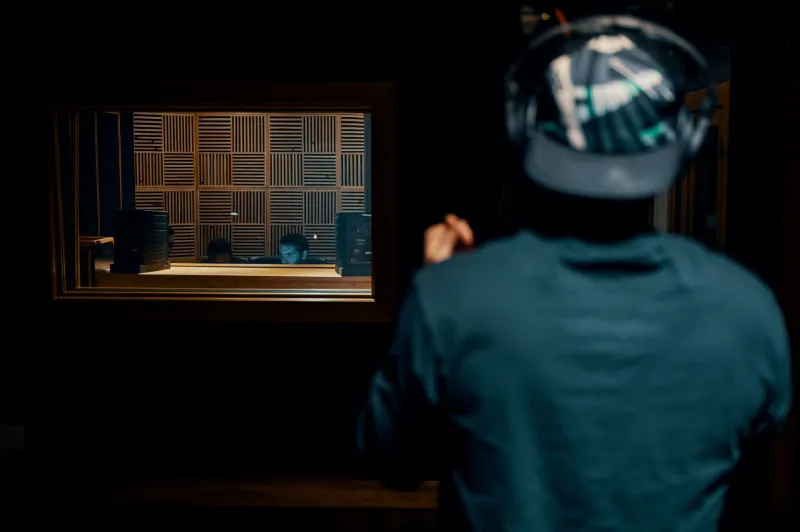
For decades, the remix was somebody else's playground — a label-approved side project handed to a hot producer while the original artist sat on the sidelines. That era is ending fast. A growing wave of musicians is diving back into their own catalogs, reshaping old songs on their own terms, and discovering something surprising: the second version sometimes hits harder than the first.
This isn't just a trend. It's a statement.
The Old Model Was Never Really About the Artist
Let's be honest about how remixes used to work. A label would license a track to a DJ or producer, usually someone with commercial momentum, and the result would hit streaming platforms or club playlists with the original artist's name attached almost as an afterthought. The creative conversation was happening entirely without them.
For artists who built their identity around authenticity — the indie singer-songwriter recording in a spare bedroom, the bedroom pop artist who pressed 500 CDs and sold them at shows — that model felt like a betrayal. Your song, your story, someone else's fingerprints all over it.
But something shifted when distribution democratized. When artists gained direct access to their masters — or at least to their digital distribution pipelines — the idea of revisiting old work without anyone's permission became not just possible but genuinely exciting.
Digging Through the Crates (Your Own Crates)
There's a particular kind of creative energy that comes from returning to a song you wrote years ago. You know it intimately, but you're also a different person now. Your production skills have grown. Your taste has shifted. The genre landscape has changed around you.
For a lot of independent artists, the self-remix has become a way to bridge that gap — to bring an older audience forward while introducing new listeners to work they never would have found otherwise.
Take the case of lo-fi artists who originally released music in 2018 and 2019, right when that aesthetic was peaking. Some of those tracks got buried under the avalanche of content that followed. Now, several of those same artists are revisiting those releases with updated production — cleaner mixes, live instrumentation layered over the original bones, or genre pivots that reflect where they've actually landed as musicians. The result isn't a betrayal of the original. It's a conversation between who they were and who they are.
Genre-Switching as Creative Reinvention
One of the most compelling uses of the self-remix is the genre pivot. An acoustic folk track getting a full electronic rework. A hip-hop deep cut reimagined as a slow-burn R&B ballad. A pop song stripped down to a single guitar and a raw vocal take that exposes something the original production was hiding.
This kind of reinvention does something interesting for an artist's narrative. It signals growth without abandoning the catalog. It tells fans, I'm not running from where I came from — I'm building on it.
For emerging artists especially, this approach has a practical upside. Releasing a self-remix is essentially a new release — it gets its own streaming placement, its own promotional cycle, its own shot at algorithmic discovery — while carrying the emotional weight of something with history behind it. You're not starting from scratch. You're starting from somewhere.
Collaboration on Your Own Terms
The self-remix doesn't have to be a solo project, either. A growing number of artists are using their back catalog as a collaboration tool — inviting producers, vocalists, or instrumentalists they've built relationships with into an existing song rather than starting a brand-new co-write from zero.
This approach lowers the creative stakes in a useful way. The bones of the song are already there. The new collaborator isn't being asked to build something from nothing; they're being invited to respond to something that already exists. That often produces more interesting results than a blank-canvas session would.
It also creates a natural story for promotion. The journey from original to remix — why this song, why this collaborator, what changed and what stayed — is exactly the kind of content that resonates with audiences who want to understand the creative process, not just consume the product.
The Catalog as a Living Document
Maybe the biggest shift the self-remix represents is philosophical. For a long time, releasing a song felt like closing a door. Once it was out, it was fixed — a document of a moment, untouchable in any meaningful way.
That idea is dissolving. Artists who embrace the self-remix are treating their catalog the way a novelist might treat their drafts — as something that can be returned to, reworked, and released again when the moment is right.
This isn't revisionism. It's evolution. And for independent artists who own their work outright, it's one of the most powerful tools available.
The song you released two years ago that got 800 streams and then disappeared? It's not dead. It's waiting. You've learned things since then. Your audience has grown. The production tools available to you now would make your 2021 self genuinely jealous.
The Permission You Already Have
Here's the thing nobody talks about enough: most independent artists already have everything they need to do this. If you own your masters, if you have access to your original session files, if you have a DAW and an internet connection — you have the infrastructure for a full creative reinvention of your own catalog.
No label approval required. No budget negotiation. No waiting for someone else to decide your old work is worth revisiting.
That's the real remix rebellion. Not the sound, not the genre switch, not the collaborator list. It's the act of deciding, on your own, that your old songs deserve another shot — and then actually giving it to them.
At Operation Phoenix Records, we've always believed that the most exciting music comes from artists who refuse to let anyone else define the boundaries of their work. The self-remix is one of the purest expressions of that refusal. Your catalog isn't an archive. It's raw material. Use it.