Better Together: The Wild New Math Behind Music's Most Unexpected Creative Partnerships
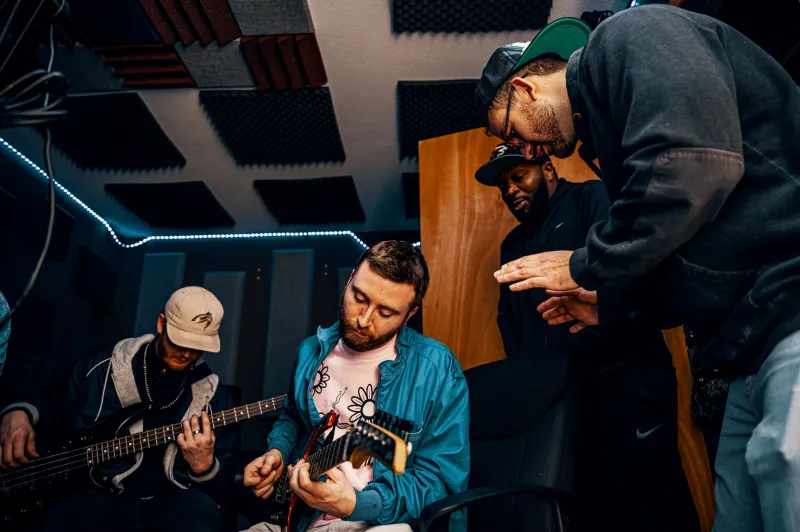
Pop open any buzzing playlist right now and try to find an album cut that features exactly one artist doing exactly one thing in exactly one genre. Go ahead. We'll wait.
It's getting harder. And honestly? That's not a complaint.
Something has fundamentally changed in the way music gets made, marketed, and consumed in America — and it has everything to do with collaboration. Not the polished, label-arranged kind where two famous people show up to split a chorus and share a press release. We're talking about something messier, more organic, and far more interesting: the collision of genuinely different creative worlds producing sounds that neither artist could have arrived at alone.
Welcome to the collaboration economy. Pull up a chair.
Features Aren't Features Anymore
For most of music history, the guest feature was a garnish. A name on the label to move a few extra units. A favor traded between managers. The music itself was the main event; the featured artist was set dressing.
That model is essentially dead.
Today, a well-executed collaboration isn't decoration — it's architecture. The artists who are generating the most heat right now aren't treating features as add-ons. They're building tracks around the collision. The tension between two different aesthetics, two different vocal approaches, two different production philosophies — that tension is the song.
This shift changes everything about how collaborations get conceived. Instead of asking "who can I get on this track?", the more interesting question is "who would genuinely surprise me?" The answer to that second question is where the real discovery lives.
The Genre Blender Is Running Hot
Ask a working producer in Nashville, Atlanta, or LA what genres they're working in and watch them struggle to answer. The walls between country, hip-hop, R&B, indie rock, and electronic music haven't just gotten thinner — in a lot of studios, they've been knocked down entirely.
This isn't new, exactly. Genre-blending has always happened. But the speed and promiscuity of it right now is something different. Streaming algorithms reward novelty and emotional resonance over categorical tidiness. TikTok doesn't care what genre a sound is — it cares whether it hits.
What that means practically is that an artist with roots in one tradition and a collaborator from a completely different world can produce something that the algorithm serves to audiences who follow neither of them. The unexpected partnership becomes a discovery engine.
For emerging artists especially, this is enormous. A well-placed collaboration with someone from an adjacent but different scene can expose your music to an audience that would never have found you through traditional channels. It's not a shortcut — it still requires the music to be genuinely good — but it's a door that didn't used to exist.
The Social Dynamics Nobody Talks About
Here's the part that doesn't make it into the press release: creative collaborations are relationships, and relationships are complicated.
The most productive musical partnerships tend to share a few common traits. There's mutual respect, obviously, but more specifically there's a kind of mutual curiosity — each artist is genuinely interested in what the other brings, not just what they can extract from the association.
There's also usually some version of shared creative risk. The collabs that produce the most interesting music tend to be the ones where both artists are stepping outside their comfort zone, not just the lesser-known one. When a more established artist shows up willing to be changed by the process, that's when things get really good.
And then there's the question of credit and compensation — the unsexy logistical layer that determines whether a collaboration becomes a friendship or a lawsuit. The independent music world has gotten better about this, but it's still a conversation that needs to happen early and explicitly. Who owns what? How are royalties split? Who controls the master? Getting these answers on paper before the track drops saves a lot of grief later.
Production as Conversation
One of the most underrated aspects of the current collaboration boom is what's happening at the production level. When two artists from different sonic worlds come together, the producer — or producers — are essentially translating between two musical languages in real time.
The best of these sessions don't sound like one artist's track with another artist grafted on. They sound like something genuinely new. The rhythmic sensibility from one tradition, the melodic vocabulary from another, the production texture from a third source — all of it blending into something that doesn't have a clean genre label.
This is harder than it sounds. It requires producers who are fluent in multiple styles and secure enough in their own aesthetic to let the collaboration pull the track somewhere unexpected. But when it works, the result is a piece of music that carries the DNA of multiple creative lineages and sounds like none of them exclusively.
That's the sweet spot. That's what people are chasing.
Fanbases as Overlapping Circles
Beyond the music itself, there's a strategic dimension to collaboration that's hard to ignore: the audience math.
Every artist brings their community to a collaboration. When two artists with genuinely different fanbases make something together, they're not just combining audiences — they're introducing two communities to each other. Done right, that introduction sticks. Fans of Artist A discover Artist B's catalog. Some of them become permanent fans. The same happens in reverse.
This is why unexpected pairings often outperform obvious ones. When two artists who seem like a natural fit collaborate, their fanbases largely overlap — the reach is incremental. But when a folk singer and a producer from the Houston rap scene make something together, the Venn diagram of their audiences barely overlaps at all. The discovery potential is exponentially higher.
For independent artists without major label promotional budgets, this is one of the most powerful growth strategies available. Thoughtful collaboration is, in a very real sense, the most efficient form of audience development that exists right now.
The Record as Ecosystem
Zoom out far enough and what you're seeing is a fundamental rethink of what an album even is. The solo artist crafting a singular vision in isolation — that model still exists and still produces great music. But it's increasingly one option among many.
The records generating the most conversation right now often feel more like ecosystems than solo statements. Multiple voices, multiple influences, multiple production fingerprints — all woven together into something that reflects the actual texture of how music gets made when creative people find each other and start saying yes.
That's exciting. That's the kind of music that surprises you. And in a world drowning in content, surprise might be the most valuable thing an artist can offer.
The collaboration economy isn't a trend. It's the new baseline. The artists who figure out how to navigate it — who to work with, how to protect themselves legally, how to let the process change them — are the ones building something that actually lasts.